





























Welcome to the
Parasail Safety Council Website
The worlds premiere source for parasail information
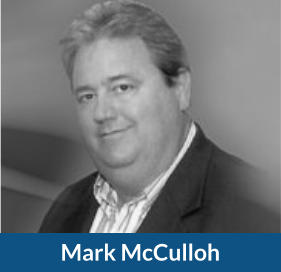
Mark McCulloh pioneered modern day equipment developing cutting edge
products for the commercial market and setting the industry standards worldwide.
His journey began in the early 70's with the introduction of the first parasail launch
and retrieval platforms which evolved into the invention of the legendary Parasail
Winchboat that revolutionized parasailing and ensured the breakthrough and
expansion of the commercial parasailing marketplace worldwide.
After fulfilling
one of his lifetime goals by introducing and operating the first parasail concession
at Walt Disney World from 1994 until 1998. Mark decided to launch an online
publication entitled “The Parasail Safety Council” which made its debut in 1998
providing the general public information about parasailing.
McCulloh’s experience spans over four decades in
parasail equipment designs, innovation, and training
techniques with a focus on improving parasail safety and
holds the distinction of being the only certified parasail
industry expert witness in both state and federal courts
representing every major accidental death and serious
injury case from 1977 to date
Modern Day Parasailing Equipment - The Brain Child Behind it all ! by David Carminito
Video Biography “Quick Clip”
“

Mark McCulloh - Curriculum Vitae
Mark McCulloh - Curriculum Vitae
Personal
Married 33 years - three children
Professional Title
Inventor
Parasail Industry Expert / Safety Consultant
Federal Court Qualified Parasail Expert
Education
Emery Riddle Aeronautical University
Fluid Power Systems
Expert Qualifications and List of Publications
I pioneered modern day commercial parasailing by developing the parasail launch/retrieval delivery and rider transport systems
used throughout the commercial parasailing industry from the early 1970’s until today. These systems have been accepted and
recognized as the industry standards for commercial operations throughout the world.
I hold the majority of every single and multiple parasail system patents granted by the United States Patent and Trademark
Office for commercial parasailing, including the:
1.
Parasail launching and retrieving apparatus,
2.
Parasailing assembly and system and launching the same,
3.
Para-sail rope guide system
4.
Aerial recliner for parasailing
5.
Rider support assembly for parasailing and
6.
Strap assembly for parasailing.
My patent relating to the strap support assembly for parasailing was used by NASA’s Dryden Flight Research Center in 1995 for
its X-38 prototype Crew Return Vehicle.
I also have extensive experience, beginning in 1971 and spanning nearly three decades, in the design, development and
operation of parasailing equipment and operations. I developed the first stationary parasail launching and retrieval platform in
1971, the first motorized parasail launching and retrieval platform in 1972, In 1976 I was the first to design and manufacture
and commercially operate the first self-contained winch boat that included a parasailor tow bar and harness assembly that is
commonly referred to as a “ tow bar”
In 1976, I was the first to commercially operate a parasail winch boat using a tow bar and harness support.
The crude tow bar design posed some risk and became problematic for commercial operations that required further
development.
In 1983, in an effort to improve overall parasailor safety, I combined the tow bar and body harnesses together and called it the
floating tow bar harness, photo below.
This was part of a series of inventions trying to improve the safety of the tow bar/harness design that eventually evolved into the
invention of the parasail aerial recliner that incorporated the same attachment point locations to the parasail canopy as the tow
bar, but eliminated the need for an independent multiple body harness systems.
In 1985, I wrote, established, and published the first Operating Standards and Guidelines for commercial parasailing, modified
versions of which is still being used by operators today. In the early 1990’s the tow bar idea become a popular low cost solution
versus the aerial recliner with the popularity of the winch boats and is now accepted as a method for multiple passengers.
Commercial Rental and Operations Experience, Knowledge and Training
I was one of the first parasail operators to be approached by a resort hotel to operate a commercial parasail concession, and
continued to do this for several resort hotels including entering into a four-year participant agreement with Walt Disney World
in 1994 to operate a commercial parasail concession. In this capacity, I wrote the first parasail operating guidelines and safety
standards manual for parasailing in a resort/hotel setting. I also have served as an advisor and consultant for other commercial
parasail operators located at other resort hotels in the United States and internationally. I am frequently called by resort hotels,
including the Radisson, to inspect parasail operations and their equipment and/or develop parasail operating guidelines and
safety standards for their commercial parasail operations.
I have also served as an advisor and consultant to other entities, including the United States Air Force and United States Navy in
the improvement of their motorized parasail “launch only” platform utilized for their water survival training program. I designed
and built the first winch boat for the military to use in this program. I have served as an advisor and consultant to the United
States Coast Guard, the National Transportation Safety Board, and the Federal Aviation Administration in their investigations of
parasail accidents. In 1998, I founded parasail.org, an online publication that provides the general public, commercial
operators, and government entities with information relating to commercial parasailing, including risk awareness, accident
statistics, consumer safety tips, and operating standards. Since the mid 1980’s I have been among the first contacted by any
local, state, or federal agency whenever a major parasail accident occurs in the United States involving serious injury or death,
and since that time, I have been involved in multiple investigations.
List of Publications
1985 - Operating Standards and Guidelines for Parasailing
1990 - Parasail Vessel Stability Study
1994 - Parasail Operations Manual Walt Disney World
2011 - Parasail Safety Analysis Report
2011 - Glossary of Terms for Parasailing
2012 - FAA petition letter for rule change
2013 - Rule 26/44 for Commercial Parasailing
List of case that I was hired as a Parasail Expert:
1977 - Gloria Hardy v. Pioneer Parachute (settled)
1986 - Freidin-Whene v. Lahania Parasail (settled)
1986 - Steven Medly v. Power Chute (settled)
1987 - Davis v. Ski Run Marina (settled)
1988 - Kumagai vs. Controlled Parasail Honolulu
1990 - Ritchie v. Parasailing Int., Inc (settled)
1990 - Myers v. Beiswenger Ent (Jury Verdict 4.6 Million)
1998 - Nicolas Fillis v. Luquillo Parasail, CWS, Indemnity Property (settled)
1999 - Rebel Watersports - Eddie Ogg (settled)
2000 - Knobloch vs. Parasail City (settled)
2000 - Shaffer v. Parasail City (settled)
2001 - Miller/Hake vs. Siesta Parasail (settled)
2002 - Walker vs. Wedge Corp. (Sheraton Hotels) (Jury verdict for Plaintiff 2.6 Million)
2002 - Straney vs AA Parasail (settled)
2003 - Kim/Bae v. SeaBreeze Parasailing (Accident date Aug 07 1999) (settled)
2005 - Baron & Paulo v. Sea Breeze Parasailing (Accident Aug 20 1999) (settled)
2005 - Dana Fazekas vs. Greg Longnecker et al. (settled)
2007 - Ransier vs. Quick Marine (filed 2002) (settled)
2007 - Wraya vs. Oberg (settled)
2007 - X-Treme Parasail, Inc., et al. Jody L. Martineaue (settled)
2007 - Broward County States Attorney v. death of the Amber May White (settled)
2009 - Woodcock vs. NC Watersports (9Millon Judgement)
2010 - White vs. Skyscreamer Parasail (settled)
2011 - Rodriguez vs. Ocean Motion Watersports (settled)
2011 - Sieradzki vs. Sun and Fun Parasail (settled)
2011 - Kraftcheck vs Carribean Watersports USVI (settled)
2011 - Cobo vs. Hi-Flyer Parasail (settled)
2011 - Silaika vs. Duck Parasail Inc. (settled)
2012 - Miskell vs. Wave Blast Water Sports (settled)
2013 - USA vs. Kyle Coleman (criminal case) (settled)
2013 - Aquatic Adventures Panama City (settled)
In 2002, The US Federal District Court in Miami, Florida qualified Mark McCulloh as an expert in the field of Parasailing
allowing his testimony in the 2002 case (Walker vs. Wedge Corp. dba Sheraton Hotels).
List of Cases that I have worked in cooperation with State and Federal investigators as an unpaid consultant
Paul Whipple vs. Adventure Guides Inc (settled)
Hendricks vs. Atlantic Parasail Inc (settled)
Meir vs. Sunset Parasail (settled)
Leslie vs. Just Chute Me Parasailing Co. (settled)
Kiernan vs. Capistrano Beach Parasailing (settled)
Reddy vs. Miami Parasail co. (name unknown) (settled)
Professional Licenses
USCG Ocean Operator (expired)
Private Pilot (expired)
Parasail Operational Experience
Land Based Operations -Vehicle, Boat , Static Line
Commercial Parasail Operations 1971 – 1998 (80,000+ flights)
Product Testing and Evaluation (20,000 + Flights)
Fluid Power Experience (hydraulics)
Hydraulics and Pneumatics design & operations
Parasail Winch Systems and design & operations
Parasail Inflation Mast Systems and Designs
Custom Hydraulic Circuits
Machine Shop Experience
Milling, Lathe and CNC Machine operations
Metal Fabricator and Assembly
Certified MIG & TIG Welder (aluminum & stainless)
Boat Building / Fiberglass Experience
Fiberglass Mold Designs
Commercial Boat Building
Custom Mold Tooling
Other Trade Experiences
Technical Drafting Layout and Design (limited CAD)
Graphics Artist
Web Site Developer
TESTIMONIALS
You'd probably like to know what law firms say about my expert witness and consulting services, so here are just a few
testimonials that I have received over the years.
Panish Shea & Boyle.. www.psblaw.com
We were reluctant five years ago to get involved in Parasail litigation. Our law firms success rate is over 99% in plaintiff liability
cases with verdicts in the billion dollar range primarily in land and air transportation market sector. Your 40 years of expertize
and experience in the field of para-sailing; and as our investigative consultant played a major role in us stepping into this venue
with three (3) successful out of court settlements to date. What we have learned in spite of recent efforts to regulate
commercial para-sailing against preventable accidents. Increased insurance claim settlements now averaging $3+ million and
judgments reaching $9 million (the highest to date) that consistently exceed policy limits an exposing non-operator third parties.
Parasail litigation has become a prime target for large firms like ourselves willing to accept these cases and produce higher than
average results for plaintiffs. - Deborah Chang, Esq. of Panish Shea & Boyle - Los Angeles Ca.
Walker vs. Sheraton Hotels… > It is important to note that the Defense was never able to qualify anyone in the industry as a
"parasail expert" to refute your testimony. Also, the jury almost recited your testimony in the verdict. In summary, your
testimony was not only helpful in winning this case, but reaffirms your position within the industry - Ralph Lotkin Esq. of Lotkin
& Cochrin - Washington DC
Woodcock vs. NC Watersports… > It was terrible thing to experience this parasailing tragedy with our clients and then listen to
defense lawyers try to pass the blame around. But no matter how bad it got, your wealth of information and experience kept
things together in helping us secure a (9 million dollar verdict). Joel Rhine of Lea, Rhine & Rosbrugh, P.L.L.C. - North Carolina
Myers vs. Beiswenger Ent… > We were in settlement negotiations for $200,000 before the court compelled your testimony
which persuaded the jury to returned a 4.5 million verdict for our clients. Stuart Ratson - Stewart, Tilghman, Fox & Bianchi P.A. -
Miami, Florida
Swinehart vs. Holloway et. al... > Parasailing negligence in this incident would have been very difficult to prove without a reliable
parasail expert. Manuel & Thompson P.A. - Panama City, Florida
Fiser vs. Thomas… > As you know, I struggled with my partners to take this case on without your assistance. We are confident
that with your support we will reach a fair settlement for our clients. Clifford Higby Esq. of Byrant & Higby - Panama City, Florida
Knobloch vs. Parasail City… > Despite the strong evidence (i.e. video tape of the adverse weather conditions and towline
snapping) would not have been sufficient to reach our settlement goals without your involvement. David Otto Esq. of Newman
& Okum, PC - New York City
Shaffer vs. Parasail City… > Your assistance in our case was paramount to our successful settlement. Roger Vaughan Esq. of
Wagner, Vaughan & McLaughlin / Shaffer v. Parasail City - Tampa, Florida
Raisner vs. Parasail USA… > This case being over ten years old it was hard to decide our next move without your expertise. Fern
Flomenhoft / Russo & Keenan - New York City
Nicolas Fillis v. Luquillo Parasail… > This case never would have gone anywhere had you not agreed to help us. Even though our
client was seriously injured, and ample evidence to prove negligence we did not feel the case would have survived in court and
ready to accept the original offer until you agreed to join the team that resulted in a settlement 7 times the original amount for
my client. Thank you. Richardo C. Rodrigus Esq. - Puerto Rico

“ Our historical timeline takes you on a 40 year journey into the evolution of modern day
parasailing, the inventions, innovations and events that symbolize the industries progress
highlighted with photos and videos geared for a curious. “
Parasail Safety Council
Main Office The Clayton & McCulloh Office Building 1065 Maitland Center Commons Blvd. Maitland, FL 32751 Telephone : (321-236-1522 Email: mark@parasail.org © 1998-2022 Mark McCulloh - All Rights Reserved
General Disclaimer: This website is provided “as is” without any representations or warranties, express or
implied. Mark McCulloh makes no representations or warranties in relation to this website or the
information and materials provided on this website. Without prejudice to the generality of the foregoing
paragraph, Mark McCulloh does not warrant that: a) this website will be constantly available, or available
at all; or b) the information on this website is complete, true, accurate or non-misleading. Nothing on this
website constitutes, or is meant to constitute, advice of any kind. Limitations of liability: Mark McCulloh
will not be liable to you (whether under the law of contract, the law of torts or otherwise) in relation to the
contents of, or use of, or otherwise in connection with, this website: a) to the extent that the website is
provided free-of-charge, for any direct loss; b)for any indirect, special or consequential loss; or c) for any
business losses, loss of revenue, income, profits or anticipated savings, loss of contracts or business
relationships, loss of reputation or goodwill, or loss or corruption of information or data. These
limitations of liability apply even if Mark McCulloh has been expressly advised of the potential loss. By
using this website, you agree that the exclusions and limitations of liability set out in this website
disclaimer are reasonable. If you do not think they are reasonable, you must not use this website